
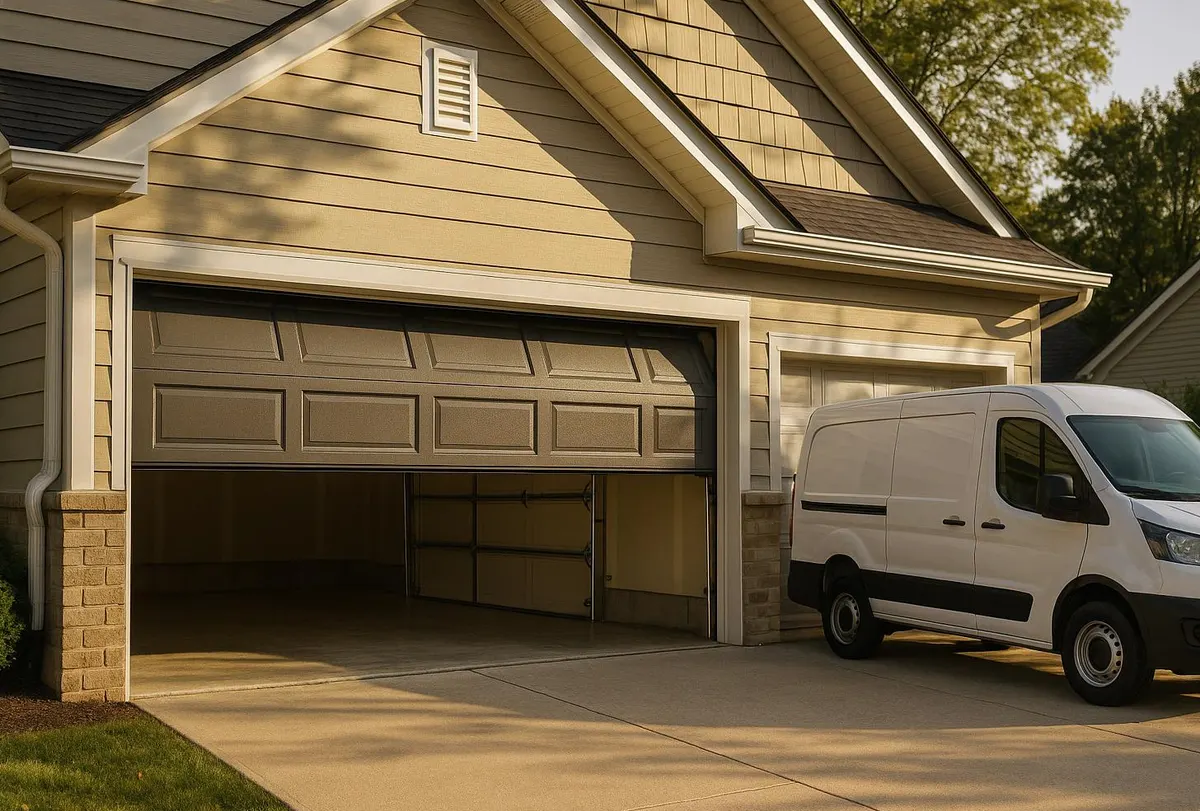
What Another Season of Neglect Could Cost You
Skip storm prep on your garage door one more season and you're gambling with more than the door itself. A door that fails under wind pressure doesn't just leave a gap — it can let wind rush into the garage and push up on the roof from the inside, which is how storms turn a damaged door into a damaged roof or collapsed wall. Replacing a blown-out double door, plus the drywall, insulation, or roof decking it took down with it, runs into thousands of dollars. A few hours of inspection and reinforcement now is cheap by comparison.
Why the Garage Door Is Your Home's Weakest Wall
Every other exterior wall on a typical house is a solid, continuous structure tied into the frame. The garage door is a large moving panel held in place by tracks, rollers, hinges, and a spring system — not a wall at all. It's also usually the single biggest opening in the house, which means it catches more wind load than any window or entry door. When a garage door fails in a storm, it's rarely because the panel material gave out. It's because the hardware holding it in the opening couldn't handle the pressure, and the door came off its tracks or buckled at the center.
This matters more here than in a lot of places. Independence sits in a region that gets real spring storm and tornado season, but high wind events aren't limited to spring — strong fall and winter fronts moving through can produce gusts just as capable of stressing a weak door. If your door and opener haven't been checked since it was installed, you don't actually know how it will hold up until it's tested in real conditions.
Signs Your Door Is More Vulnerable Than It Looks
- Visible bowing or flexing in the panels when the door is closed and wind hits it, even mildly
- Loose or rusted track brackets — the brackets holding the track to the wall should be tight, with no play when you push on them
- Worn rollers that rattle or bind, which puts extra strain on the track during gusts
- A single-layer, non-reinforced door, common on older installations, which flexes more under pressure than insulated or braced doors
- An opener with a weak or worn drive mechanism that can't keep the door seated in high wind, letting it rattle loose from the track over time
Reinforcing the Door Itself
If your door doesn't already have horizontal bracing, adding it is one of the most effective upgrades you can make. A galvanized steel strut mounted across the back of each panel stiffens the door and spreads wind load across the whole surface instead of concentrating it at weak points. For double-wide doors especially — which have more surface area and less inherent rigidity than single doors — bracing is worth the investment before a bad season rather than after a failure.
Reinforced tracks matter just as much. Standard track is fine for everyday opening and closing, but under storm-level pressure it can bend or pull away from the jamb. Heavier-gauge track, properly anchored with lag screws into solid framing (not just drywall anchors), holds up considerably better.
Wind-Rated Doors
If you're due for a replacement anyway, ask about wind-load-rated doors. These are built with reinforced hardware, stronger end stiles, and track systems engineered to handle sustained high wind, not just occasional gusts. They cost more upfront than a standard residential door — typically a few hundred dollars more depending on size and style — but for a house that takes the brunt of open-field wind or sits at the end of a street with no windbreak, that upgrade pays for itself the first time a real storm rolls through.
The Hardware Checklist Before Storm Season
- Tighten every bolt on the track brackets and hinges — vibration from daily use loosens them gradually
- Check rollers for cracking, flat spots, or excessive play and replace any that are worn
- Inspect the bottom seal for gaps that let wind-driven rain push underneath
- Test the auto-reverse safety feature on your opener to confirm it's still functioning correctly
- Make sure the opener's force settings aren't so low that the door struggles to stay seated in wind, or so high that it masks a mechanical problem
- Lubricate hinges and rollers so the door moves smoothly under the opener's full range of motion
None of this takes a full day, but it does take actually getting up on a ladder and looking closely at hardware most homeowners never inspect until something breaks.
When to Call Independence Garage Door
If you've noticed panel flex, a track that's pulled away even slightly from the wall, or you're just not sure your current door was built to handle sustained wind, that's worth a professional look before the next front moves through. Independence Garage Door can inspect your track, rollers, and hardware as part of a full garage door maintenance visit, and recommend bracing or a wind-rated replacement if your current setup won't hold up. If the door is already showing damage from a past storm, our garage door repair team can assess whether it's a fix or a full garage door installation situation before small damage turns into a bigger failure next time the wind picks up.
Don't wait for the next severe weather warning to find out how your garage door performs under pressure. Call Independence Garage Door today and get your door storm-ready before Independence, MO sees its next round of high wind.